The red-headed woodpecker is a striking woodpecker found in the eastern United States and southeast Canada. In the northern portion of their range they migrate south during the winter while in the southern portions they are year round residents.They are omnivorous. About one third of their diet comes from insects and the other two thirds is comprised of seeds and fruit. The red-headed woodpecker is one of only four species of woodpeckers that cache food. The immature below is caching an acorn so that it will have food later when times are harder.
Once the red-headed woodpecker was a common site through most of its range but over the past 50 years studies have shown that their population has declined an average of almost 3% per year.Part of this may be due to habitat loss. Red-headed woodpeckers rely heavily on dead trees. As a cavity nester dead trees provide nesting habitat. They also provide nooks and crannies for caching food. As humans began to remove more dead trees, for aesthetic reasons and for fire prevention, this limited the red-heads habitat. Competition from other cavity nesting species has probably also contributed as well as the decrease of fruit and nut bearing trees.
Tuesday, May 14, 2013
Monday, May 13, 2013
Warbler Wave Crashes on Crosby Park
Well the wave of warblers that I have been hoping for this past month finally hit this weekend. Even though it was a bit chilly it was sunny and the warblers were out in force. It was a perfect weekend for photography. Because of our late winter the trees are just starting to leaf out which makes photographing these tiny little birds a lot easier.
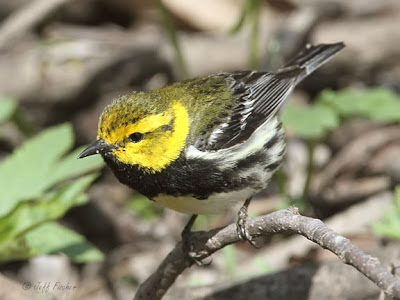
The last time that we had a warbler wave was back in 2011. During that wave I photographed many of the different species at the Minnesota Valley Refuge and Crosby Farm Park. So on Friday, after I left work, I headed over to Crosby. The woods were thick with the common warblers, yellow-rump, palm, black and white and yellow, but I also managed to find some of the sexy warblers, like magnolia, black-throated green, Wilsons, blackburnian and more. Crosby is an excellent location to find warblers during spring migration because much of the park is wooded flood plain which is excellent habitat for wood warblers. The park is also along the Mississippi River which is the path that the warblers in this area take to migrate, the Mississippi flyway.
Sunday, May 12, 2013
Arctic Skipper
The Arctic skipper is, as its name would suggest, found primarily in the northern reaches of the Northern Hemisphere. Its range extends as far north as Alaska. Here in Minnesota we typically see one brood per year and they usually emerge in late spring or early summer, mid May to early July. The larva feed on a variety of different types of grasses while the butterfly feeds on the nectar of various species of flowers. The Arctic skipper is one of the more colorful skippers that we see here.
Labels:
Arctic skipper,
Macro Monday,
Mandarin Orange Monday
Saturday, May 11, 2013
Warblers Everywhere
I have spent most of the past couple days out photographing warblers. In years that we have winter that lasts longer then normal we often have a week or two of great warbler opportunities. The warblers usually begin to migrate through at the beginning of May. Usually it is the yellow-rumps that come first and they are the species that we see the greatest numbers of. Usually it is the end of the second week that we see the sexy warblers, like the blackburnian above. So far this year there are still a few species that I hope to see but have not spotted yet but tomorrow is supposed to be a nice day weather wise so I still have a chance. Even if I do not see all the species I have had some great opportunities to photograph most of the species which is a lot better than last year. In 2012 winter was over in March. When the warblers came through in May the trees all had leaves and there were plenty of insects to eat up on their nesting territories up north so I only was able to photograph yellow butts.
Labels:
Bird D'pot,
blackburnian warbler,
Camera Critters
Friday, May 10, 2013
Thursday, May 9, 2013
Flock of Pelicans
As we were waiting to release birds at the annual Spring Raptor Release, last Saturday, a flock of white pelican. These birds traveled up the Mississippi flyway from their wintering grounds down south and will probably end up on breeding grounds in Canada, North Dakota or Wyoming.
Wednesday, May 8, 2013
Tuesday, May 7, 2013
Quail
The Gambel's quail is a species of quail found in the desert regions of Arizona, California, Colorado, New Mexico, Nevada, Utah, Texas and northern Mexico. These birds spend most of their life on the ground. Flight is rarely used and then it is typically to escape danger. When they do fly it is usually for only a short distance. Most of the year they live in groups called coveys except during the mating season when they can be quite territorial. They are named for William Gambel who was a 19th century naturalist that explored the southwestern United Stataes.
Labels:
ABC Wednesday,
Gambel's quail,
Wild Bird Wednesday
Monday, May 6, 2013
Denali
Back in 2001 Michelle and I took a trip to Alaska. It was awesome. The scenery and the wildlife was absolutely amazing. We spent 3 days on the tour bus in Denali National Park. During the time that we were the there, most of the mountain was covered by the clouds. Since Denali is the largest mountain in pure mass this is not uncommon.On our last day I did take this shot with much of the mountain showing through. I am hoping that some day soon we make it back to Alaska.
Sunday, May 5, 2013
Six-spotted Fishing Spider
Saturday, May 4, 2013
Palm Warbler
Today was the annual Spring Raptor Release for The Raptor Center, although it did not feel very much like spring. My duties included taking pictures and talking to people about raptors, two things which I enjoy very much. While we were waiting for the actual release program to begin I looked down and spotted a small bird in the grass in front of the stage. I thought that I caught a glimpse of yellow and rusty red so I quickly focused my camera on it. Since I was photographing the release I did not have my big lens with me but I could tel through the camera that it was a palm warbler. We have been seeing yellow-rumped warblers for a week or two but this was my first non yellow butt warbler of the year. Like most of the yellow-rumps that we saw hopping around this bird was seriously searching for food and the hundreds of people that were just 15 feet away were not very important at the moment. I am afraid that with the cold snap that we have had the past week that much of the would be prey, bugs, are no longer around which will make things difficult to be a warbler here, this spring. May the 4th be with them!
Friday, May 3, 2013
Duckling
I am not sure what species of duckling that this was that I photographed at Lake Vadnais in mid summer.
Thursday, May 2, 2013
Wednesday, May 1, 2013
Tuesday, April 30, 2013
Pileated Woodpecker
The pileated woodpecker is the largest woodpecker species in North America. That is if the ivory-billed woodpecker is extinct. This crow sized woodpecker bores rectangular holes into trees and other wood in search of ants and other insects. The holes that they create are so large that they often attract other woodpeckers and birds that feed of insect or use the space as a nesting cavity. They are found through out the eastern half of the United States, southern Canada, and the west coast of the United States. They are not migratory so they stay on their breeding territory all year long.
Subscribe to:
Posts (Atom)


