Sunday, April 15, 2012

Bee Macro

bee macro With the warm weather we have been having this spring I have been seeing bees busy around for about a month now. Bees are important because they are one of the main pollinators for plants. You can see the pollen sacks on the back leg of this bee. If you look close you can see small amounts of loose pollen on the front legs and antennae. This loose pollen will fall of when the bee is in a flower and it will pollinate the plant that the flower belongs too.

Saturday, April 14, 2012

Star of Siam

This tropical waterlily is called Star of Siam. I photographed it last July at the water garden at the Como Zoo.

Friday, April 13, 2012

Threatened Wolves.

Things look pretty bleak for one of the few large predators left in the United States, the gray wolf. Despite the fact that the number of gray wolves in the us is under 10,000 the federal government has taken the wolf off of the endangered species list. The wolf became unprotected in Minnesota, Wisconsin and Michigan earlier this year. Now here in Minnesota the right wing tea bagger congress is already trying to pass legislation for hunting the wolf. Typically once a species leaves the endangered species list hunting is not allowed for years so that scientists and environmentalists can study the effects of taking them from the list. Out west things are even worse for the wolves. They are in the process of removing protections in Idaho, Wyoming and Montana. In much of this area the wolf will be considered a predator and can be shot on site with out a permit or season. This means that the wolf populations that were carefully reintroduced in Yellowstone, like the one above, are a risk of being shot if they step a paw outside of the park. If you would like to help stop the senseless slaughter of wolves in Minnesota please visit this website http://www.howlingforwolves.org/

Thursday, April 12, 2012

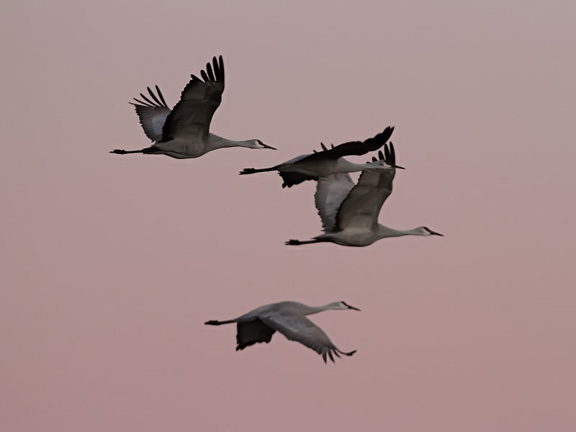
The Sand-hill Crane by Mary Austin


WHENEVER the days are cool and clear,
The sand-hill crane goes walking
Across the field by the flashing weir,
Slowly, solemnly stalking.
The little frogs in the tules hear,
And jump for their lives if he comes near;
The fishes scuttle away in fear
When the sand-hill crane goes walking.

The field folk know if he comes that way,
Slowly, solemnly stalking,
There is danger and death in the least delay,
When the sand-hill crane goes walking.
The chipmunks stop in the midst of play;
The gophers hide in their holes away;
And 'Hush, oh, hush!' the field-mice say,
When the sand-hill crane goes walking.

Tuesday, April 10, 2012

Moorhen

The common moorhen is a member of the rail family. They are found on every continent around the world with the exception of Australia and Antarctica. In North and South America the American Ornithologists Union and International Ornithological Congress voted in 2011 to split the American versions of the common moorhen into its own species called the common gallinule.
As members of the rail family the common moorhen have long toes. This helps them to run across mud and floating vegetation. They are usually found in freshwater wetland with a lot of tall vegetation which they use for cover. They are a dabbler so they primarily eat aquatic vegetation, although they will also eat the occasional snail or aquatic invertebrate.


Monday, April 9, 2012

Tuesday Tweets

bobolink The bobolink is an unusual bird usually found in open fields and grasslands. They breed in the northern United States and migrate all the way to the central portion of South America for the winter. They have two molts per year. On their breeding grounds the males are unmistakable with their black belly, white back and yellow head. On their wintering grounds in South America they molt into a much more drab plumage.

Welcome to Tuesday Tweets. To join in the fun, just post a photo of a bird on your blog then come here and enter your information in the inlinkz tool down below. Don't forget to put a link back to here on your blog and the pretty little banner photo. Then visit all of the sites that participate to see a lot of cool bird pics.


Sunday, April 8, 2012

Gray Hairstreak

gray hairstreak The gray hairstreak is the most common hairstreak found in North America. They range from southern Canada through the US and Mexico and into Central America down to Venezuela. The adult butterfly feeds off nectar from numerous types of flowers, in this case butterfly weed.
gray hairstreak Males often perch on trees or bushes and wait for receptive females. The female lays her eggs singly on the larval host plant, which includes mostly plants of the mallow and pea family. Typically here in the northern part of their range there are two broods each year.

Saturday, April 7, 2012

Trudy Slocum

This tropical waterlily is called Trudy Slocum. I photographed it last July at the water garden at the Como Zoo.

Friday, April 6, 2012

Magic and Peanut

It has been a while since I have posted any pictures of our cats. Even though they are very photogenic they usually do not like to have their picture taken. So every once in a while I sneak up on them and try and take a candid shot before they get curious and decide to come over and investigate the camera. The black and white is a male named Magic. He is about 3 years old and very playful. I think that he has ADD because he hardly ever sits still. The brown tiger is peanut and she is about 2 years old. She can be very cuddly especially with my wife. We adopted both of them from a non-kill shelter.

Thursday, April 5, 2012

* reflections by David Taylor


how beautiful the sun's reflections make
the air touched, gently rippled lakes
perfectly formed and round
on the still pond it's found
how muted soft in morning mists
by which the fertile fields are kissed
magnificent the coloured clouds
as its light they partly shroud
how would you see that form
without all this that is its gift of dawn


without all this that is its gift of dawn
how would you see that form
as its light they partly shroud
magnificent the coloured clouds
by which the fertile fields are kissed
how muted soft in morning mists
on the still pond it's found
perfectly formed and round
the air touched, gently rippled lakes
how beautiful the sun's reflections make


Tuesday, April 3, 2012

Ladder-backed woodpecker

ladder-back woodpecker The ladder-backed woodpecker is a small woodpecker that is found in arid habitats. It has a range that includes southern parts of California, Nevada, Arizona and Texas as well as Mexico and parts of Central America. I took these pics in south Texas.
ladder-back woodpecker The ladder-back woodpecker is a cavity nester. They will usually nest in holes in trees or cacti. They are usually seen boring into trees or foraging under the bark looking for caterpillars, beetle larva and other insects to eat. They will also eat the fruit from blooming cacti.


Monday, April 2, 2012

Tuesday Tweets

blue-headed vireo The blue-headed vireo was at one time called the solitary vireo and was found through out much of North America. However it was determined that there was enough difference between birds from each area to break the solitary vireo into three distinct species. The blue-headed vireo breed in the deciduous and conifer forests of eastern Canada. Since their main food source is insects they migrate south and spend the winter in the southeastern US, Mexico and Central America.

Welcome to Tuesday Tweets. To join in the fun, just post a photo of a bird on your blog then come here and enter your information in the inlinkz tool down below. Don't forget to put a link back to here on your blog and the pretty little banner photo. Then visit all of the sites that participate to see a lot of cool bird pics.


Sunday, April 1, 2012

Green Darner

green darner dragonfly While I was out this afternoon I spotted my first dragonflies of the year. I spotted over a half a dozen green darners patrolling the water at the Minnesota Valley Refuge. The green darner is usually the first dragonfly that we see each year because some of them migrate south in the fall. This is not a full migration like birds do, the darners life span is not long enough, it is a partial migration similar to monarch butterflies. The dragonflies head south where they mate, lay eggs and then die. The eggs hatch into underwater nymphs. In the green darner it only takes about 3 months before the nymphs are ready to emerge and become dragonflies. Some of these newly emerged dragonflies head back north where they will mate and then lay eggs and die. Their offspring will be emerging at the end of summer just in time to migrate south. This year they seemed to have arrived a bit earlier then most years probably because of the early spring and mild winter we have had this year. I did not get any pictures of those that I spotted today. At this time of year they spend a lot of time hunting and rarely stop to pose for photos. This pic was taken in the refuge in the summer