When most people think of milkweed typically think of the seed pods and their cargo of silk topped seeds. However many types of milkweed have colorful flowers. This photo is an example of Asclepias incarnata or swamp milkweed. The flowers are usually pretty good at attracting butterflies and other nectar eating insects.Saturday, October 16, 2010
Flower Rice Lake
When most people think of milkweed typically think of the seed pods and their cargo of silk topped seeds. However many types of milkweed have colorful flowers. This photo is an example of Asclepias incarnata or swamp milkweed. The flowers are usually pretty good at attracting butterflies and other nectar eating insects.Friday, October 15, 2010
Halloween Pennant
Most dragonflies that have color on their wings are a part of the skimmer family. Their are quite a few different type of skimmers but the ones that are the most colorful, at least near where I live, are the pennants.
Pennants get their name because of the perpendicular way that they often perch at the top of a lone stick, weed stalk, or blade of grass. When perched this way they some what resemble a pennant or flag. We have two types of pennants in Minnesota, the calico pennant, which is red or yellow, and the Halloween pennant pictured above. This is either a female or young male because it is yellow in color. Mature males, and some females, are mostly orange and black in color which is why they got the name Halloween pennant.Thursday, October 14, 2010
Sky by Holly Rucker
Enveloping the world in a light hearted way
-
One lonely cloud sits in the sky
A marshmallow island in a sea of blue sky
-
What a miracle that cloud is
Sitting higher than any bird can fly
-
Floating in a way
So graceful and effortless
For us to try
Would disrespect the sky
Wednesday, October 13, 2010
Tuesday, October 12, 2010
Why Leaves Change Color
This is the time of the year when many people around here like to get out and look at all of the wonderful fall colors. It is kind of like a last hurrah of color before month of grey and white winter weather. But have you ever wondered what makes the leaves change color?
Leaves get their green color from a chemical called chlorophyll. Chlorophyll is what helps plants to convert water, carbon dioxide, and sunlight into glucose which is what the plants eat. During fall the days get shorter and light has to travel further to get to the earth, because the tilt in the planet, the plants can no longer get enough sunlight to perform photosynthesis so they begin to go into a dormant state. As photosynthesis stops the chlorophyll in the leaves begins to break down. Other chemicals that are present in many leaves, like carotenes and xanthophyll, take longer to break down then the chlorophyll. So once the green chlorophyll is gone then the reds, yellows, and oranges of these other chemicals are all that remains until the leaves fall from the tree and end up floating alone at the shore of the river.
Monday, October 11, 2010
Split Rock Lighthouse
A couple of weekends ago Michelle and I headed up north to take a look at the fall color. The North Shore, of Lake Superior, offers amazing scenery all year long but it can be absolutely breathtaking in the fall.
One place that we stopped on our trip was the Split Rock Lighthouse. The Split Rock Lighthouse is an icon. It has been photographed by people from around the world and it has been featured in many magazine and web articles, including here were I have featured it in several posts earlier this year.
This year is the 100th birthday of the lighthouse so it is getting even more attention then normal. I was happy to have the opportunity to photograph the lighthouse from Ellingson Island. I think that it is the best view of the lighthouse except possibly from a boat. The island is closed for most of the spring and summer to allow the wildlife to reproduce with out interference.Sunday, October 10, 2010
Introducing the Sexually Dichromatic Dot-tailed Whiteface
It always amazes me how similar dragonflies are to birds. For instance many dragonflies are sexually dichromatic just like many song birds. What is sexual dichromatism? It simply means that there is a difference in color between males and females of the same species. Like male cardinals are bright red while the female cardinal in more of a yellow color.
If you did not know anything about dragonflies and you looked at the two pictures above you would probably think that you were looking at two different types of dragonflies. However both of the pictured dragonflies are dot-tailed whiteface, a sexually dichromatic member of the skimmer family. The top photo is an example of the dot-tailed whiteface female while the bottom photo is a male. Not all dragonflies are sexually dichromatic, just as all birds are not, but many of the skimmers are.Saturday, October 9, 2010
Flower Wild River
Friday, October 8, 2010
American Goldfinch
If you have a feeder in your yard some place in the United States then chances are that you recognize the bright yellow bird above. The American goldfinch is common bird of fields and open woodlands but they are perhaps best known as frequent backyard visitors. They are almost strictly vegetarian, eating seeds they prefer sunflower, thistle, milkweed and nyjer.
Most birds molt once a year but goldfinch molt twice. The first molt is in late winter when the males molt into their bright yellow breeding plumage. The females are a dull yellow color with similar black wing bars, see the photo above. In late summer they will molt again and the males will become a dull yellow similar to the color that the female is year round.
Thursday, October 7, 2010
Clouds by Quentin Sands
That is what I see when I look up there.
All different shapes forms and sizes just floating free and seem to be drifting,
suspended
miraculously.
I see a bird, a dog, a fish............ no, a hat,
There's another one forming I wonder what's that?
It might be a car a house or a tree............ this is natures show and guess what it's free!
Hey wait a minute they are getting dark grey and thick; what could ever be the meaning of this?
I feel a quick breeze pushing my face and it clearly means that I should start making haste,
It's still a good day and I feel proud, That I took the time to watch those wonderful clouds.
-
-
Wednesday, October 6, 2010
Tuesday, October 5, 2010
American Coot
When most people see an American coot they think that it is a duck, this is a common misconception, after all it looks like a duck. The truth is that coots are members of the rail family. The reason is because they have lobed style toes on their feet, like the rails, instead of webbed feet like a duck.Monday, October 4, 2010
Necedah National Wildlife Refuge
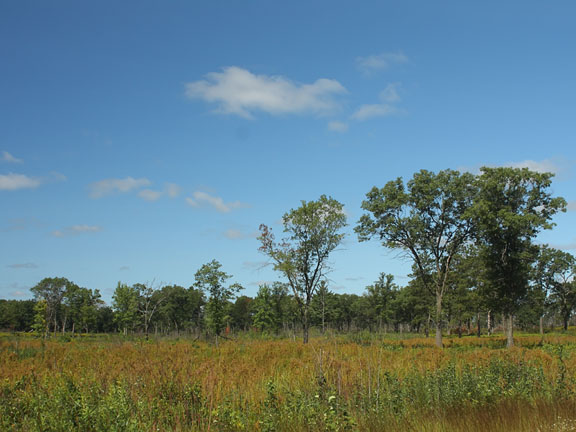
Early this summer I made what has become an annual trip out to the Necedah National Wildlife Refuge located in central Wisconsin. Necedah is about a three hour drive each way but it is worth it because I get to see some species that I do not usually see around home.
One of the birds that I usually see in Necedah that I rarely see near home is the read-headed woodpecker. The population of the red-head is in decline do to habitat destruction. These birds rely on habitat with a lot of dead trees, which in many places are removed to limit the danger from forest fires. At Necedah the dead trees are left to naturally decay, even in areas that are control burned, so there is a thriving population of these bright headed woodpeckers.
Another bird that I have watched at Necedah that we do not usually see in the eastern portions of Minnesota are bobolinks. These birds are usually found in open grasslands. In Minnesota they are fairly common in the western part of the state but not so much on the eastern side where I live.
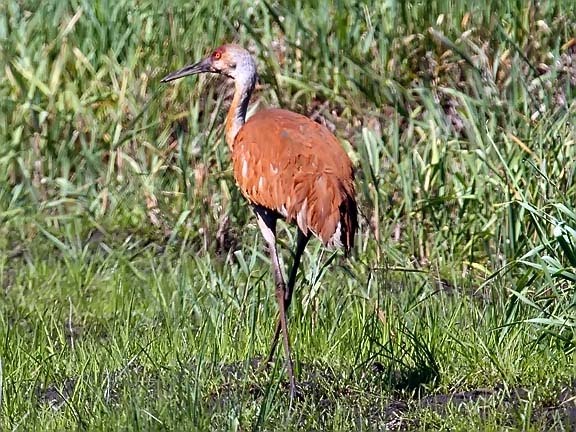
Necedah is one of the few places that you can see endangered whooping cranes. I did not see any on this trip but I have been fortunate to have them fly directly over my head at Necedah in the past. On this trip the only cranes in the field were sandhill cranes.
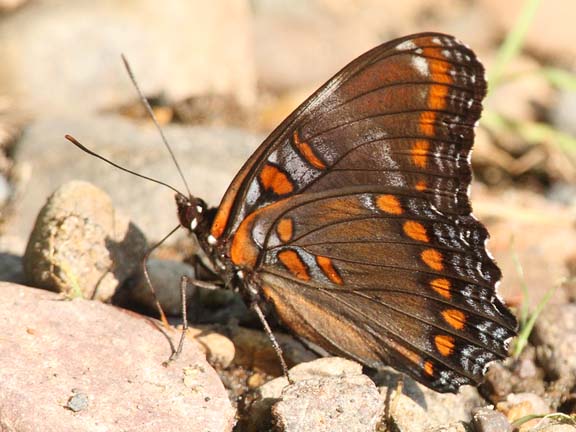
The main reason that I go to Necedah in the early summer is to photograph the endangered Karner blue butterfly. Karners usually have two broods through out the summer. The first brood emerges from their chrysalis in early June the second around mid August.
The Karner blue rely on wild lupine as the host plant for the larval or caterpillar form. Unfortunately it is more difficult to find lupine because bushes, trees, and other plants often block it from the sun that it requires. In order to spur new growth staff at Necedah performs control burns on different areas through out the park each year. The burning kills off the overgrowth and allows new life to take root. Lupine is one of the first plants to come in so the burns help to sustain the habitat necessary for the Karner blues to live and propagate.
Subscribe to:
Posts (Atom)