Monday, April 12, 2010

South Padre Island Birding and Center

On our second full day in Texas we decided to visit the South Padre Island Birding and Nature Center which is located on South Padre Island near the Convention Center. This is a pretty new park and facility which is associated with the World Birding Center. The center focus of the park is the visitors center which is loaded with interactive exhibits, auditoriums, classrooms, gift shop and topped off with a five story observation tower. The tower provides a great view of the entire park as well as parts of the island and the Laguna Madre. Just be careful or you might find yourself stuck like I did. I decided to go out on the balcony to get a better look only to find that no one had unlocked the doors yet, we got there right at opening, and so the door locked behind me. Thank goodness Michelle finally rescued me.
The park consists of 43 acres of various types of habitat including freshwater ponds, island scrub brush, brackish and saltwater marshes. Winding through the different habitats there is 4800 linear feet of boardwalks and paths as well as 7 different blinds.
The main subjects to photograph here were waterfowl and wading birds. We spotted six different types of herons and egrets, including the great egret, snowy egret, reddish egret, great blue heron, tricolored heron and the little blue heron, which is pictured above.
They were also some wading birds that we do not often get to see here in Minnesota such as the black-legged stilt, white ibis, endangered brown pelican, and the roseate spoonbill, which is pictured above. We were excited about the spoonbills, even though we have seen them on most of our trips to Florida, because this was the closest that we have ever been able to get to these spectacular birds.
Besides the waterfowl and waders there were also quite a few shorebirds including log-billed curlew, American wimbrel, least and semipalmated sandpiper.
However this park is not just for the birds. We spotted this turtle, which I believe is a red-eared slider swimming around one of the fresh water ponds. Red-eared sliders are often used as pets.
There were also a few predators hanging out in the park. At one point a northern harrier, sometimes referred to as a marsh hawk, flew lowly over the grass in search of prey and in the water there was an even larger predator. The American alligator often floats motionless on the top of the water, looking a lot like an old log, waiting for prey to get close enough where it can spring its trap.

Sunday, April 11, 2010

The Importance of Bees

Bees are an integral part of the world in we live in. With approximately 20,000 known species they can be found on every continent, other then Antarctica, and in any habitat where you can find flowering plants.
Bees feed on nectar, which provides energy, and pollen, which provides protein. They also bring pollen back to the hive or nest to feed their larva. They drink nectar from blooming flowers by using their proboscis. You can see in the pictures above, especially the top pic, the proboscis inserted into a flower. They are able to collect pollen because of the slight static charge that they carry due to their furry bodies. The pollen attaches to the bees body as is in contact with the bloom. The bees will then stop to pack the pollen into little saddlebag type pouches on their legs called the scopa. The scopa appears as a golden square on the back leg of the bee above.
Not all of the pollen makes it into the scopa and when the bee makes a visit to another flower some of the pollen may fall off and pollinate the plant. This pollination is important because about one third of our food supply is still pollinated by insects, mostly bees. I photographed this bee on goldenrod last summer at Necedah NWR in Wisconsin.


Saturday, April 10, 2010

Common Mullein

Anther common wildflower that we see in Minnesota is Verbascum Thapsus, otherwise known as common mullein. Common mullein is a stalk type plant which grows up from a base of rosette leaves. The stalk is packed with small yellow five petal flowers only a few of which open at any one time. Although it is an invasive species, it is originally from Europe where it is called great mullein, it is not very aggressive. This may be because it is intolerant of shade from neighboring plants.

Friday, April 9, 2010

Sandhill Cranes

The most abundant crane species in the world is the sandhill crane. Their estimated population of 600,000 to 800,000 is divides into five different subspecies. Most of the sandhill cranes fall into one of the two migratory subspecies, the greater sandhill, with an estimated population of between 100,000 and 200,000 and the lesser sandhill, which has a population of over 400,000.
The other three subspecies are non-migratory and have a much smaller population. There is the Mississippi sandhill, which lives around the northern gulf coast, the Florida sandhill and the Cuban sandhill, which can be found in Florida and Cuba respectively. These three subspecies are considered threatened or endangered mostly due to habitat loss and range in population from around 5000 to 50.
Even though their populations are currently stable, or in some cases growing, the greater and lesser sandhill cranes still face issues when it comes to habitat loss. Because their numbers are distributed during breeding season they are not very affected by habitat loss during that time of year. During the winter and migration are another story though.
During the winter greater and lesser sandhills migrate south and congregate in wetlands located in warmer climates. Habitat loss in these areas could have a major effect on the sandhill population. Even more potetially dangerous is the loss of migration habitat. during the fall sandhills gather together in staging areas, like Crex Meadows where these pictures were taken. Hundreds or perhaps thousands of cranes stop in these areas to eat so that they have enough energy for the long flight south. As these areas shrink so will the population of sandhills. Perhaps the most critical habitat for sandhill cranes lies on a seventy mile stretch of land in the center of Nebraska. The Platte River with its shallow center is perfect roosting territory for cranes migrating north in the spring. During the day they feed on grains left over in the neighboring farm fields and then they return to the protection of the river at night, forcing any predators to cross the water before getting to the cranes. Eighty percent of the sandhill population, or over 450,000 cranes, stop at the Platte River each spring. If this habitat were ever lost it might mean the end of this wonderful species of bird that has been on this earth for over two million years.

Thursday, April 8, 2010

Crex Meadows

Crex Meadows is one of my favorite places to shoot during the warmer months. The main reason why Crex is so productive every year is their system of water management. A series of dams and dikes through out the park let the staff control the water levels in the various pools, ponds and lakes. These water features provide the critical habitat for many various types of creatures giving me a lot of variety of subjects to photograph.

Wednesday, April 7, 2010

Tuesday, April 6, 2010

Turtles at Crex Meadows

Turtles are members of the reptile family that can be recognized by their bony or cartilaginous shell. The shell of a turtle is comprised of the carapace, the upper shell, and the plastron, covering the belly, which are joined together on the sides by bony structures called bridges. Since the shell is an extension of the turtles backbone and ribs the turtle can never leave its shell, despite what you may have seen in the cartoons.
Turtles have been around a long time, the earliest known turtles roamed the earth over 200 million years ago. Today there are over 300 different types of turtles around the world. Some, like many of the large sea turtles, are endangered but others, like the painted turtles pictured here, can be found at most lakes or ponds.
Like all reptiles, turtles are ectothermic, which means that they can not regulate their own body temperature. This is the reason why you often see turtles resting on logs, rocks, or other platforms during sunny days. They use the sun to help warm up their cold blooded bodies. During the winter they will bury themselves in mud at the bottom of the lake or pond and go into a sort of dormant or state. Even though they breath air like we do turtles can survive around 5 months with out breathing while they are hibernating.

Monday, April 5, 2010

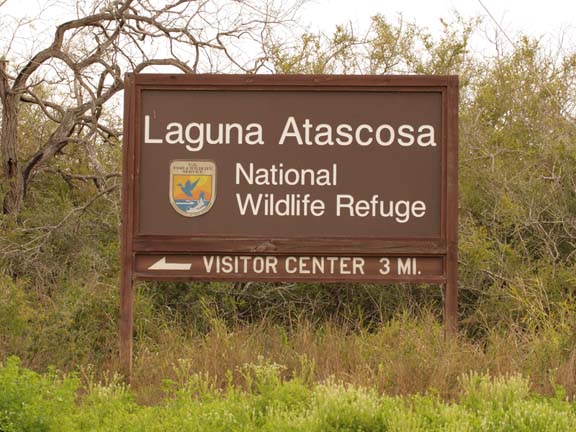
Laguna Atascosa

For our first full day in Texas we decided to head over to the Laguna Atascosa NWR. The Laguna Atascosa boasts a bird list that includes 413 different species, which is more then any other wildlife refuge in the United States.
The first thing we did was to head over to the visitors center to pick up our bird list, map and other important info. We also brought a few oranges with since they do accept citrus donations, which they put out for some of the more tropical birds.
Around the visitors center they have several feeding stations as well as photo blinds where people can get a good look at many of the south Texas specialties as they feed and bathe.
One of the most popular of the south Texas specialties is the green jay. There were quite a few of these birds around enjoying the citrus and seeds that were provided at the feeders. South Texas is the only place in the US where you can see green jays.
After spending some time photographing the birds at the blinds and feeding station we decided to take a tram tour of the refuge. The tour took us out on the Bayside Drive which goes through much of the eastern portion of the park.
Bayside Drive took us out to the shore of the Laguna Madre, the salty bay that divides Padre and South Padre Islands from the mainland. The Laguana Atascosa was designated a refuge in 1964. Its purpose was to help preserve habitat for wintering waterfowl, particularly the redhead duck. About 80 percent of the worlds redhead duck population winters in the refuge area.
We did not see many redhead ducks, it was a bit late in the season and many of the waterfowl had already begun their migration north, but we did see other birds enjoying the waters of the Laguana Madre. Birds like white pelican and osprey, pictured above, where having good luck fishing in the salty waters.
One of the major types of habitats that can be found on the refuge is the thorn forest. These track can contain over 200 different varieties of thorn bush and provides critical habitat to the many different animals and birds including the endangered ocelot. There are less then 30 ocelots living on the refuge and this is the majority of the US population.
Other animals also enjoy the solace of the thorn forest. The rattle snake takes advantage of the protection of the thorns when it comes out to get some sun, which it needs to help regulate its body temp. This was the only rattle snake that we spotted on our trip. The shot is not very good, because it was pretty well hidden in the vegetation, but I was not about to go rearrange things to get a better pic.
Birds also take advantage of the thorn forests. Even though most of the plants have sharp thorns or leaves to protect themselves many birds have figured out ways around the defence mechanisms. Since the yucca trees were in bloom while we were there many of the birds were taking advantage.
Besides the thorn forests and the wetlands most of the rest of the refuge is grasslands. A lot of the area that is now grasslands was once used by the military as an aerial gunnery and bombing range during World War II. Some of the ammunition supply bunkers and building foundations still exist on the refuge.
Now the grasslands is home to many different animals and birds. Rodents thrive in the area which brings in predators like snakes and raptors. Sometimes, however, the prey is too large for any of the predators. Such is the case with the wild pigs that roam the refuge rooting up plants. The ancestors of these pigs were either released or escaped from neighboring farms and have become feral over the years and generations. They typically weigh around 100 to 150 pounds but in some cases they have been found to reach weights of over 400 pounds. The refuge works hard to manage the population so that they do not over run the entire refuge.

Sunday, April 4, 2010

Coral Hairstreak

The hairstreak family of butterflies get their name from the hair like appendage that extends from their hindwing. It is believed that this "tail" may be a sort of defense mechanism, that is intended to fool predators into believing that it is a face with a spot on the wing as an eye and the hair looking like an antennae.
The coral hairstreak is the only member of the hairstreak family that does not have the hair like appendage. It is a fairly common butterfly that can be found in almost every state in the continental United States.
I took these pictures at Crex Meadows in Wisconsin last July. I found many of these hairstreaks grouped up on the aptly named butterfly weed. Like most butterflies the adults eat nectar from flowers of plants like butterfly weed, dogbane and New Jersey Tea.
After mating the females will lay eggs singly on or at the base of one of the caterpillar host plants which include, wild cherry plum and chokecherry. The butterfly will hibernate over the winter in its egg form and then hatch in the spring. The caterpillar will spend their days hiding in clutter and then come out to feed at night.

Saturday, April 3, 2010

Orange Hawkweed

Although it has what I think is a cool name, orange hawkweed is an invasive species that has moved in from Europe. It is listed as a secondary noxious weed in Minnesota because it spreads rapidly forming a solid mat of dandelion type flowers. This leads to a loss of diversity in native plants in effected areas.
Orange hawkweed is often found in newly disturbed areas, such as clear cut forests, fields and road sides. Because it is an early succession plant it will often spread and take over an area. It may even have alleopathic effect on neighboring plants, meaning that it may produce biochemicals that effect the growth and development of other plants.

Friday, April 2, 2010

Eastern Towhee

One bird that is heard more often then seen is the eastern towhee. These birds are usually found on the ground, where they often make a ruckus in the leaves as they search for seeds, berries, and insects to eat.
The eastern towee looks similar to it's cousin the spotted towhee, except for the white wing spots that give the spotted towhee its name. At one time these were both considered the same species, the rufous-sided towhee. The eastern towhee can be found throughout most of the eastern United States with Minnesota being on the western border of its range. The spotted towhee can be found in the western half of the US and down into Mexico. I photographed these in June at the Necedah NWR in Wisconsin.
Since they spend much of their time foraging on the ground it makes sense that these birds would also nest on the ground. The female builds the nest by herself. The nest is cup shape and usually sunken into a pile of fallen leaves. The nest is typically made up of bark, twigs and leaves with the inside lined with fine grass, feathers and animal hair. Sometimes there is cross breeding between the eastern and spotted towhee in the middle of the US where the the range of their ranges overlap.

Thursday, April 1, 2010

Gray Skies over Crex

After a few very nice days things here have clouded up and it looks like we may get some rain or possibly even thunderstorms tomorrow. It is hard to complain though since the temps are up in the 70s which is 20 plus degrees above our normal high. So much for those snow storms this winter disproving global warming, or global climate change which is actually more appropriate. This cloudy day was taken at Crex Meadows last summer.