Showing posts with label Florida. Show all posts

Monday, March 11, 2013

Loxahatchee National Wildlife Refuge

Last October we made our first trip down to south Florida since 2004. During our past trips we spent most of our time on the Gulf Coast side of the state except for trips to the Everglades, the Keys, and Merrit Island NWR. On this trip I wanted to hit all of our favorite places and explore some new locations. So we ended up staying a couple of night on the east coast near Boca Raton. This was near Loxahatchee NWR which was one of the new locations that I wanted to try out.  
 Loxahatchee is a 145,800 acres of northern Everglades habitat located in Boyton Beach Florida. It was established in 1951 under the authority of the Migratory Bird Conservation Act. Much of the wetlands on the refuge are managed by a series of dikes, canals and other water control structures to preserve habitat for migrating waterfowl. My reason for visiting the refuge was to try and get a glimpse of a swallow-tail kite and a snail kite. Both species of kite can be found on the refuge depending on the season. I think that we were a bit late for the swallow-tail kite but we did manage to get pictures of a snail kite feeding on apple snails. The refuge also had a great butterfly garden around the visitors center. We saw a lot of new species of butterfly including this orange-barred sulphur. Both the kite and the butterfly were both lifer species for us so it was well worth it to check out a new location.


Monday, February 25, 2013

Everglades National Park

Osprey
 South Florida was once a large series of wetlands that ran from the Kissimme River down to the Biscayne Bay. The numerous ponds, slough, sawgrass marshes, hardwood hammock and forested uplands were the basis of an intricate ecosystem that was home to many unique plants and animals. Unfortunately this amazing wetlands was a nightmare for early settlers that were looking for land to settle, farm, and graze their livestock. As these settles began to drain portions of the wetlands the fragile ecosystem began to suffer. Species at the top of the food chain, like the osprey above, were lead indicators of the damage to the environment.
White Ibis
By 1900 early environmentalists and conservationist became concerned about the impact that people were having on the habitat. Besides draining the wetlands, hunters were also killing millions of the wading birds, like the white ibis above. In 1900 Florida instituted a ban on plume hunting in southern Florida but many people were making a living off slaughtering these birds. The ban lead to tensions that eventually got conservation officers killed. In 1928 Ernest Coe began an effort to create the Everglades National Park and  in 1934 congress finally designated the park. It took supports another 13 years to purchase the land and in 1947 the Everglades National Park was dedicated.


Monday, February 18, 2013

Big Cypress

Green Heron
 Big Cypress National Preserve is the United States first National Preserve. Much of the 720,000 acre National Preserve was originally intended to be a part of the Everglades National Park back when it was established in 1947. Unfortunately there were problems acquiring the land from its private owners so eventually that tract of the Everglades national Park was eventually scrapped.
White Peacock Butterfly
Later in the 1960s a plan was unveiled to great the worlds largest airport in parts of what is now Big Cypress. Many locals joined with environmentalists, hunters and several Native American tribes to prevent the construction. Some of the locals and sportsmen were worried about access to Big Cypress if it was added to the Everglades National Park and so they came up with a compromise and the first US National Preserve was born.
American alligator
Most of the Big Cypress habitat consists of fresh water cypress swamps. The preserve is the most biologically rich habitat in the Everglades Region. It is home to numerous species of bird, butterflies and dragonflies. It has a large population of American alligator. It also is home to nine federally listed endangered species including manatee, the Florida Panther, and the Florida sandhill crane subspecies.

Monday, February 4, 2013

Ding Darling NWR

White Pelicans
 The J.N Ding Darling National Wildlife Refuge sits on Sanibel island on the gulf coast of Florida. The refuge was created in 1945 by Harry S Truman and was originally called the Sanibel National Wildlife Refuge. The refuge was renamed the J.N. Ding Darling NWR in 1967 in honor of Jay Darling five years after his death. Darling was a political cartoonist and environmentalist. He won two Pulitzer Prizes for his political cartoons which often supported environmental and conservation causes. Darling served on Roosevelt's President's Committee for Wildlife Restoration, also known as the Beck Committee. He also served as the director of the Bureau of Biological Survey where he championed the Duck Stamp Act of 1934.
Mangrove Tree Crab
The refuge consists of 6400 acres of mangrove forests, submerged sea grass beds, cordgrass marshes, and West Indian hardwood hammocks. This environmentally vital habitat was saved to protect endangered and threatened species as well as providing habitat for many species of migratory birds. Darling was part of the effort that stopped the state of Florida from selling the land to developers and is attributed with convincing Roosevelt to make it a national refuge. The refuge is a feeding, roosting and nesting area to over 220 species of birds including white pelicans, first pic, that migrate to south Florida for the winter. The refuge also provides habitat to other creatures such as alligators, crocodile, manatee and others. One creature that we found here that we had never seen before was the mangrove tree crab, above. The mangrove tree crab is the only crab other then the hermit crab that can climb trees. We found several of them on the mangrove trees, on the refuge, seemingly basking in the sun.   

Monday, January 14, 2013

Charlotte Flatwoods Environmental Park

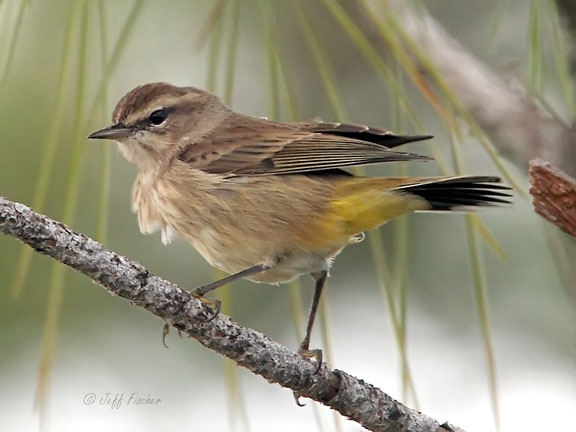
Palm Warbler
 Before I go on vacation I get on the Internet and do some research about possible locations that I can visit that will give me an opportunity to see some cool nature. This was the case on our last trip down to south Florida in late October. Florida is abundant with nature hot spots so I had every day pretty well planned. On the day we arrived hurricane the remnants of hurricane Sandy were still affecting the weather on Florida's east coast. The skies over Orlando, where we flew in, were very overcast and not good for photography so we headed to the south down to the west coast where we were staying for the first few days. After a short stop at the Venice Rookery, which was pretty fruitless since it was not quite late enough in the year, we headed down to Sanibel Island where we were staying.
Ornate Pennant
On our way to our hotel we came across a sign for the Charlotte Flatwoods Environmental park. Since we were a little ahead of schedule I decided to make a quick stop to check things out. We only had about an hour, before we had to continue south, which was not even close to enough time to check out the 487 acres of mature pine flatwoods, hydric pine fatwoods, marsh wetlands, ponds and dry prairie. We did see several species of birds, butterflies, dragonflies and bees during our short stay. The most exciting thing for me was the ornate pennant. I have photographed calico and Halloween pennants but the ornate pennant was a species that I had never seen before. The ornate pennant, which used to be called the faded pennant, is found along the east coast from New Jersey south to the tip of Florida and along the Gulf Coast west to east Texas.


Thursday, January 10, 2013

Palm Trees at Ding Darling NWR

Doesn't it look warm? I wish it was that warm here. Today the high will be around 34 degrees F which is unseasonably warm for Minnesota in January.

Monday, January 7, 2013

Corkscrew Swamp Sanctuary

Wood Stork
The Corkscrew Swamp Sanctuary is an Audubon sanctuary located in south western Florida. The sanctuary began back in the early 1900's when the National Audubon Society hired a game warden to protect the rookery in the Corkscrew area. The rookery was a nesting place for many egrets who were hunted at the time for their plumes. As the plume trade died out, partially due to laws passed to help protect many of the species that had been hunted to near extinction, the rookery prospered and the wardens retired. The swamp was safe until the 1940's when loggers moved into the area and began removing 500 year old trees. People living in the area were concerned of losing all of the forest to logging so the National Audubon Society along with many other concerned groups began a campaign to raise the money necessary to purchase and protect the swam.
Red-shouldered Hawk
By 1954 almost 5700 acres had been acquired and the Corkscrew Swamp Sanctuary was born. The new sanctuary contained the last expanse of virgin bald cypress left in the world. It was also the home of the largest and most important endangered wood stork rookery, see top photo, in the United States. Over time the sanctuary has grown, almost doubling in size. Visitors to the sanctuary back in the 1940's and 1950's  had entered the park by four-wheel drive and toured in canoes. Today the park has 2.25 miles of boardwalk that runs through out wetland and lets visitors get up real close and personal to the wildlife. Besides the 200 species of birds that can be found in the park there is also 34 species of mammals, 64 species of reptiles and amphibians and thousands of species of insects. I spent a good part of two days exploring the swamp but like usual I wished I would have had more time.

Sunday, November 4, 2012

Julia

Julia Butterfly
We just returned from a trip to Florida yesterday. Hopefully that the posts that I set up for while I was gone did not disappoint. With a few changes to our itinerary we were able to miss most of the weather from the hurricane and the only weather that we had to deal with was several windy days. We were a little early for many of the wintering birds that are migrating down but Michelle has family plans around the holidays and we needed to use some vacation or lose it so we made the best of it. Fortunately there were some fun birds and lots of new species of butterflies, dragonflies, and spiders. This is a Julia butterfly. The Julia is a tropical brushfoot butterfly that is usually found from Brazil to southern Florida and south Texas, although sometimes during the summer they will expand north. They typically fly most of the day and can usually be found year round through out much of their range. I took this pic at Loxahatchee NWR.

Tuesday, January 8, 2008

Florida Roseate Spoonbill

One of the more colorful and popular birds that we have seen in our travels to Florida is the roseate spoonbill.
Spoonbills are found through out the Gulf of Mexico, Central and South America and the West Indies. In Florida we have seen these birds at the Everglades National Park, Merritt Island, and Ding Darling NWR, where these photographs were taken.
It is obvious where the spoonbill gets its name from. They use their long flat bill to stir up the water helping them to find he small invertebrates, fish, and crustaceans which they eat.
The feathers of the spoonbill become much more pink as they age, being mostly white when they are young. It is possible that a diet rich in shrimp, that feed on algae which produce red and yellow pigments called carotenoids, is what gives them their color.

Friday, January 4, 2008

Florida Osprey

When we visited Florida in February of 2006 there were still a lot of areas that had not recovered from the devastation of hurricane Katrina. The Flamingo area of Everglades National Park was one of these areas. Flamingo is at the very southern tip of Florida. It consisted of a visitors center, lodge, restaurant and cabins all of which were damaged by Katrina. We decided to drive down to Flamingo, even though most of it was closed, to see what the damage was like. The birding spots that we had visited in the past were all destroyed or closed. We did find some Osprey who did not appear too affected by the damage.
Ospreys are an extremely migratory species. They are found all over the world, on every continent except Antarctica, and typically migrate long distances between their summer and winter grounds.

In North America, studies by the Raptor Center using satellite tracking show that birds in the western half of the continent tend to migrate down the west coast and winter in Mexico and Central America. Birds in the eastern part of the continent tend to follow the east coast south to Florida. Some of the birds stop there and winter in Florida while others cross the Caribbean and winter in places like Cuba, Haiti, the Dominican Republic or they continue on to South America. Osprey in the central part of the continent either go straight south through Mexico and winter in Central or South America or they head east to Florida and follow the same path as the birds from the east coast.Osprey can be seen in Florida year round, although some people believe that some osprey who have a summer range in Florida might migrate to South America during the winter and their numbers are replaced by birds from further north, who are wintering in Florida.

Thursday, January 3, 2008

Venice Rookery

Now that we are in the long cold dark days of winter here in Minnesota the birding has gotten a little slow. So in order to keep things on the blog a bit more interesting I have decided to share some of the pictures that I have taken from my travels in the past. I will continue to keep posting whatever wildlife that I can find during the winter, but in order to keep us from going crazy from looking at 60 posts of chickadees or patterns of snowflakes swirling in the icy gusts I will mix in some bird pics from some warmer locales.

This first set of great blue heron pictures were taken back in February of 2006 at the Venice Rookery.The Venice Rookery is a small island in a small lake located in a Sarasota County park within the city of Venice, Florida. The island is covered with trees and bushes which are home to nesting snowy egret, great white egret, anhinga and great blue herons. The lake forms a natural barrier which helps to protect the rookery from many of the ground based predators. If you visit the rookery during the birding season, winter and early spring especially the months of February and March, you will get to see these wading birds in their breeding plumage, mating, building their nests, and caring for their young. You may also see night herons, tricolored herons, palm warblers, pileated woodpeckers and many other types of birds on your visit.The rookery is monitored by the Venice Audubon Society and is one of the must see locations if you visit south Florida during the birding season.