Showing posts with label palm warbler. Show all posts

Tuesday, April 29, 2014

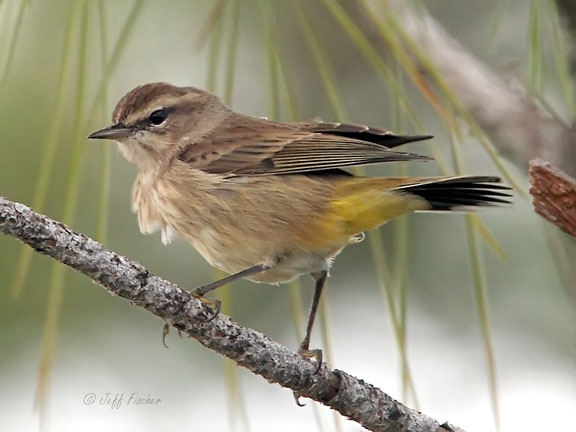
Palm Warbler

Palm Warbler
 Late every spring warblers invade Minnesota. Starting typically in late April and running through the first few week of May warblers stop by on their way migrating north. How long that they stay depends n the weather. In years where we have an early spring they hardly stop at all but in years where winter lingers we can see them for a week or two. Last winter was a great year for photographing warblers. Winter lasted very late and when the warblers came through in May they stayed for a while because their were no insects to eat further up north. The late winter also meant that the trees had not leafed out yet which makes the warblers much easier to see. This year has the possibility of being another good year for warblers watching. We have had some warm days lately which has some of the trees budding but a cold snap this week with a possibility of a little snow might help slow things down just enough for us to et a good warbler showing this year.
Palm Warbler
One of the earlier species to come back through are the palm warblers. The reason that they are one of the first back is because they do not winter as far south as most warblers. They typically winter in the southern U.S and Caribbean, while most species of warblers head down to Central and South America for the winter. Palms breed in northern Canada. They are found mostly in the eastern half of North America. I often hear palm warblers before I see them. Instead of flitting around in the trees like most warblers they are usually foraging through the leaf litter, like a fox sparrow, looking for insects and seeds. 


Saturday, May 4, 2013

Palm Warbler

Palm Warbler

Today was the annual Spring Raptor Release for The Raptor Center, although it did not feel very much like spring. My duties included taking pictures and talking to people about raptors, two things which I enjoy very much. While we were waiting for the actual release program to begin I looked down and spotted a small bird in the grass in front of the stage. I thought that I caught a glimpse of yellow and rusty red so I quickly focused my camera on it. Since I was photographing the release I did not have my big lens with me but I could tel through the camera that it was a palm warbler. We have been seeing yellow-rumped warblers for a week or two but this was my first non yellow butt warbler of the year. Like most of the yellow-rumps that we saw hopping around this bird was seriously searching for food and the hundreds of people that were just 15 feet away were not very important at the moment. I am afraid that with the cold snap that we have had the past week that much of the would be prey, bugs, are no longer around which will make things difficult to be a warbler here, this spring. May the 4th be with them!


Monday, January 14, 2013

Charlotte Flatwoods Environmental Park

Palm Warbler
 Before I go on vacation I get on the Internet and do some research about possible locations that I can visit that will give me an opportunity to see some cool nature. This was the case on our last trip down to south Florida in late October. Florida is abundant with nature hot spots so I had every day pretty well planned. On the day we arrived hurricane the remnants of hurricane Sandy were still affecting the weather on Florida's east coast. The skies over Orlando, where we flew in, were very overcast and not good for photography so we headed to the south down to the west coast where we were staying for the first few days. After a short stop at the Venice Rookery, which was pretty fruitless since it was not quite late enough in the year, we headed down to Sanibel Island where we were staying.
Ornate Pennant
On our way to our hotel we came across a sign for the Charlotte Flatwoods Environmental park. Since we were a little ahead of schedule I decided to make a quick stop to check things out. We only had about an hour, before we had to continue south, which was not even close to enough time to check out the 487 acres of mature pine flatwoods, hydric pine fatwoods, marsh wetlands, ponds and dry prairie. We did see several species of birds, butterflies, dragonflies and bees during our short stay. The most exciting thing for me was the ornate pennant. I have photographed calico and Halloween pennants but the ornate pennant was a species that I had never seen before. The ornate pennant, which used to be called the faded pennant, is found along the east coast from New Jersey south to the tip of Florida and along the Gulf Coast west to east Texas.


Tuesday, October 30, 2012

Palm Warbler

Palm Warbler
 The palm warbler is a bird that is found in the eastern half of North America. They breed up in the bogs and boreal forests of Canada. Palm warblers in the western portions of the range tend to be duller with bellies that are pale yellow to white. Birds in the eastern portion of the range usually have an entirely yellow belly. Since Minnesota is on the western range our birds are not as bright. You can see the white patches on the breast of the bird pictured above. Like most warblers the Palm warbler is primarily a bug eater. I most often see them on the ground foraging in the brush for bugs. During the winter they head south and live along the gulf coast and Caribbean. During migration they will supplement their diet with seeds and berries.


Welcome to Tuesday Tweets! To join in the fun just post a photo of a bird and then link it by here by using the handy dandy link below. Then make sure you visit other sites to do a little bird watching.


Sunday, October 5, 2008

Hawk Weekend at Hawk Ridge

Yesterday was a beautiful. In Minnesota at this time of the year it is important to take advantage of any good weather that you get because it may be the last good weather that you get for the year. So I decided to run up to Hawk Ridge in Duluth, MN for the day. I have not worked on the pics that I took yesterday yet but I have decided to take a bit of a break from July and to post the pics that I took at Hawk Weekend at Hawk Ridge now.
Hawk Ridge sits under a sort of bottle neck for the Mississippi Flyway. During the fall migration raptors coming from the north do not like to fly over Lake Superior. They are trying to conserve energy for their long migration flight, some will migrate to the southern tip of South America, so they look for thermals and wind currents to help them fly. Thermals are air currents created by hot air, heated by the ground, rising up into the atmosphere. Raptors, like the immature bald eagle pictured above, ride these thermals high up into the sky and then glide for miles with out having to flap their wings and expend vital energy.
It is theorized that for every mile a raptor rises in a thermal it gains 7 miles of gliding. However the cold water of Lake Superior do not produce any warm air so there are no thermals to ride out over the lake. That is why raptors, like this merlin, skirt the lake and travel down the coastline and right over Hawk Ridge.
Depending on the weather and time of the year it is possible to see hundreds and even thousands or raptors in one day. This year the big day was September 15th, 4 days before I went up. After a rainy weekend the weather cleared and over 22000 birds were counted. The record for Hawk Ridge is about 106,000 in one day, there were special conditions that year with the remnants of a hurricane pushing the birds from the eastern half of the continent west. Most of the birds on the big days are broadwing hawks who travel in large groups called a kettle. Other birds like the merlin above usually travel alone or possibly in small groups.
The Hawk Ridge Bird Observatory uses this phenomenon to study raptor migration. They sponsor counters who count the number of raptors that fly over by species each day, often also detailing if the bird is an immature or an adult. They also work with several groups that trap and band raptors as the travel by. This merlin was one of a few birds banded on September 20th while I was there.
The Hawk Ridge Bird Observatory also uses this time of year to help educate the public about our raptor friends. Besides for Hawk Weekend, which is the advertised weekend celebration. They also have education staff and volunteers who do educational programs and help people at the ridge to spot and ID birds. People who visit Hawk Ridge on the weekends during September and October may also get the opportunity to view some of the banded raptors close up and personal.
Banded raptors are often sent down to the ridge so that the educational staff can use in short programs. Visitors have the opportunity to adopt these birds, for a small fee which helps to fund the observatory, and release them back into the wild at the end of the program. Unfortunately the list on the 20th was so long I decided to wait and try to adopt a bird on another trip up their.
Hawk Ridge was established as a nature reserve by the city of Duluth back in 1972. The city, with funds donated by the Duluth Audubon Society through a loan from the Nature Conservancy, purchased and set aside 115 acres for the reserve and then added a 200 acre buffer zone the following year. The land and trails are managed by the Hawk Ridge Bird Observatory and are full of wildlife besides raptor, like the white-thoated sparrow above.
Expanding their mission beyond just raptors some of the banding stations also have mist nets up to capture and band migrating passerines. These birds are also up for adoption. Because they are less expensive to adopt many people adopt these birds for their children. It is magical to watch the kids stand there with the bird in their hand and then watch them smile as it take off into the sky.
It was pretty cool that they caught an ovenbird since it is usually pretty difficult to get pictures of these birds. Unfortunately this little guy does not have a very good chance of surviving migration. According to the Cornell Lab of Ornithology, studies show that half of all adult ovenbirds die each year with the oldest known ovenbird being only 7 years old.
Since I am a member of the Hawk Ridge Bird Observatory, I was able to go down and tour one of the banding station. It was great to go down and take a look at the operation. They were looking for volunteers before the season began and I contemplated participating but I just did not have the time to spend up in Duluth, but I may volunteer next year, if I get a chance, and it was good to see how things work.
They did not trap any raptors while I was down at the banding station but they did have a couple of passerines including this palm warbler. There was one young person who was in our group and we decided to let him release both birds.
There is still time to get in on the fun up at Hawk Ridge. I believe that they do education on weekends through October. If you have the opportunity then I definitely recommend the trip. If Duluth is just too far away then please consider helping them out by becoming a member or adopting a bird online.

Saturday, May 17, 2008

Warblers from Wood Lake to Hold You Over

I have spent the past couple of days exploring some of the best birding spots in Montana. Friday I was at Medecine Lake NWR and today I made my first trip to Bowdion NWR. This part of Montana appears to going through some what of a drought and both parks appeared to be much dryer then normal, so birding was harder then it was last year. I have not had time to upload any pics, since we just got to the hotel after a full day of birding and driving, but I do have some nice shots that I took at Wood Lake Nature Center on May 9th.
grackle
yellow-rumped warbler
palm warbler
black and white warbler
orange-crowned warbler


Tomorrow we head into Yellowstone. Depending on how late that we shoot I will try and get a couple of sample pics of the trip uploaded.

Tuesday, May 13, 2008

Birding Dodge Nature Center

Here are some more pictures from Dodge Nature Center that I took on May 5th
female redwinged blackbird
palm warbler


Tennessee warbler

yellow warbler


yellowthroat
broadwinged hawk

Monday, May 12, 2008

Birding Close to Home.

I have been making a concerted effort to try and do more birding closer to home lately. This is partly to help the environment and partly to help my wallet. So far this has not been a problem since the warblers are migrating through the area and giving all of us birders plenty to look at and photograph. One place that I have been spending some more time at this year has been Dodge Nature Center. I visited Dodge on the first Saturday in May and had a pretty good day.
One thing that I have been seeing more of this year are female red-winged blackbirds. They have always been around in years past but the females typically are harder to spot. That is because they usually spend most of their time down in the reeds where their coloration helps to camouflage them. This year though it seems like I am seeing more of them out in the open. I am not sure why this is. Maybe the female red-winged blackbirds are sick of sitting in the shadows and want their turn in the light, they see a woman running for president this year and have decided that this is their year.
Some birds, like northern cardinals, are pretty common around here all year long, but that does not mean that if a cardinal gives me a great pose that I will not stop to take its pic.
White-breasted nuthatch are another year round resident.
Yellow-rumped warbles are now extremely common.
Palm warblers are fairly numerous right now also. They are usually the ones hoping around on the ground.
You can also tell the palm warblers by their typical little tail bopping.
The common yellowthroat is one of nine species of yellowthroats. They range through out the US and Canada, except the far north, during the summer and migrate to Mexico during the winter.
This photo is not great but it is not usually that easy to get a picture of a sora so I was happy just to get a recognizable photo. The sora is a member of the rail family. It lives in the cattails in fresh water mashes and is more usually heard then it is seen.
On the other hand wild turkeys have become quite plentiful around here. Each evening they can be seen in fields through out most of the state.
A pleasant surprise on this evening was spotting a coopers hawk out on the prowl. I was able to get a couple of shots as it flew over head.
Coopers hawks are part of the accipiter family of hawks. Accipiters have rounded wings just like other hawks, buteos, do but the wings are shorter and their tails are longer. This gives them more maneuverability when they fly which they need since much of their diet consists of small birds. The other accipiters that are native to North America would be the sharp-shinned hawk and the goshawk.
The birds were not the only thing out on that evening. Reptiles, like these painted turtles, are cold blooded and can not regulate their body temperature on there own. That is why you can often see them out sunning themselves on nice days.
As dusk approached the white-tailed deer began to come out. Minnesota has an over abundance of white-tailed deer. This is due to loss of natural predators like timber wolves and bear. Hunting helps to curve some of the over population. Even though I have never hunted and I am not a very big fan of hunting, it is more merciful to put some deer down quick through hunting then to allow them to starve to death in the winter because there is not enough food to support the large population. However many of the deer have gotten smart and live inside the city limits where hunting is not allowed.